ASMS 2026, San Diego. Workshop edition.
A few months ago I wrote about a panel Lindsay Pino and I ran at HUPO in Toronto, and how the biggest surprise was watching scientists realise the skills they already have are far more transferable than they think. (That post is here if you missed it.)
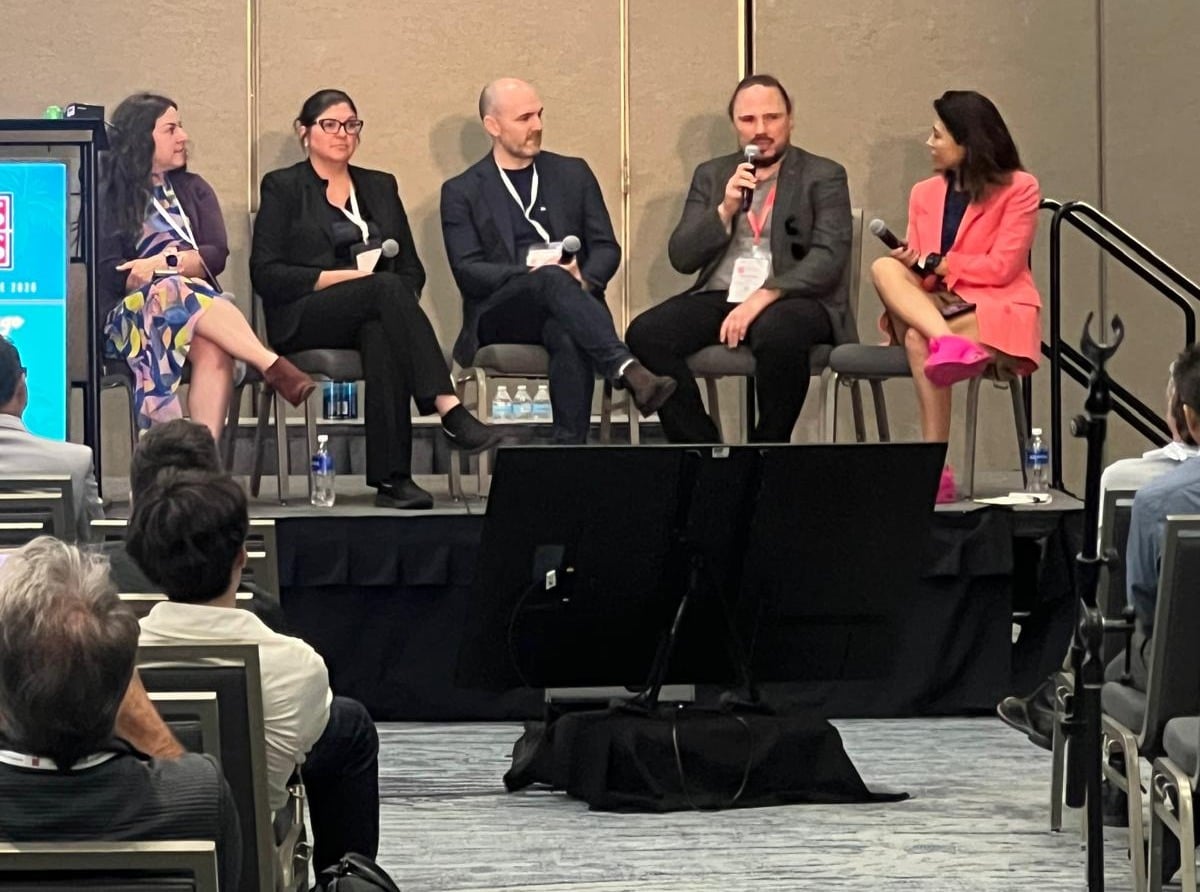
We ran the format again on Monday June 1 at ASMS in San Diego, and we wanted to share interactions and discussions that resulted. Same idea, no slides, no company pitches, just founders in chairs and an hour and a half of honest conversation under Chatham House rules so everyone could speak freely. Different panel, different stories, and an audience that narrowed one thing in particular: funding.
That makes sense. Mass spectrometry is a brutally capital intensive field to build a company in. You can't bootstrap a business in the same way a software founder in a coffee shop can when the thing you need costs more than a typical house. So while the through line was still the same one we keep coming back to, that an entrepreneurial mindset doesn't require starting a company, this room pushed harder on the uncomfortable, practical, "how do I actually fund this" reality. I loved them for it.
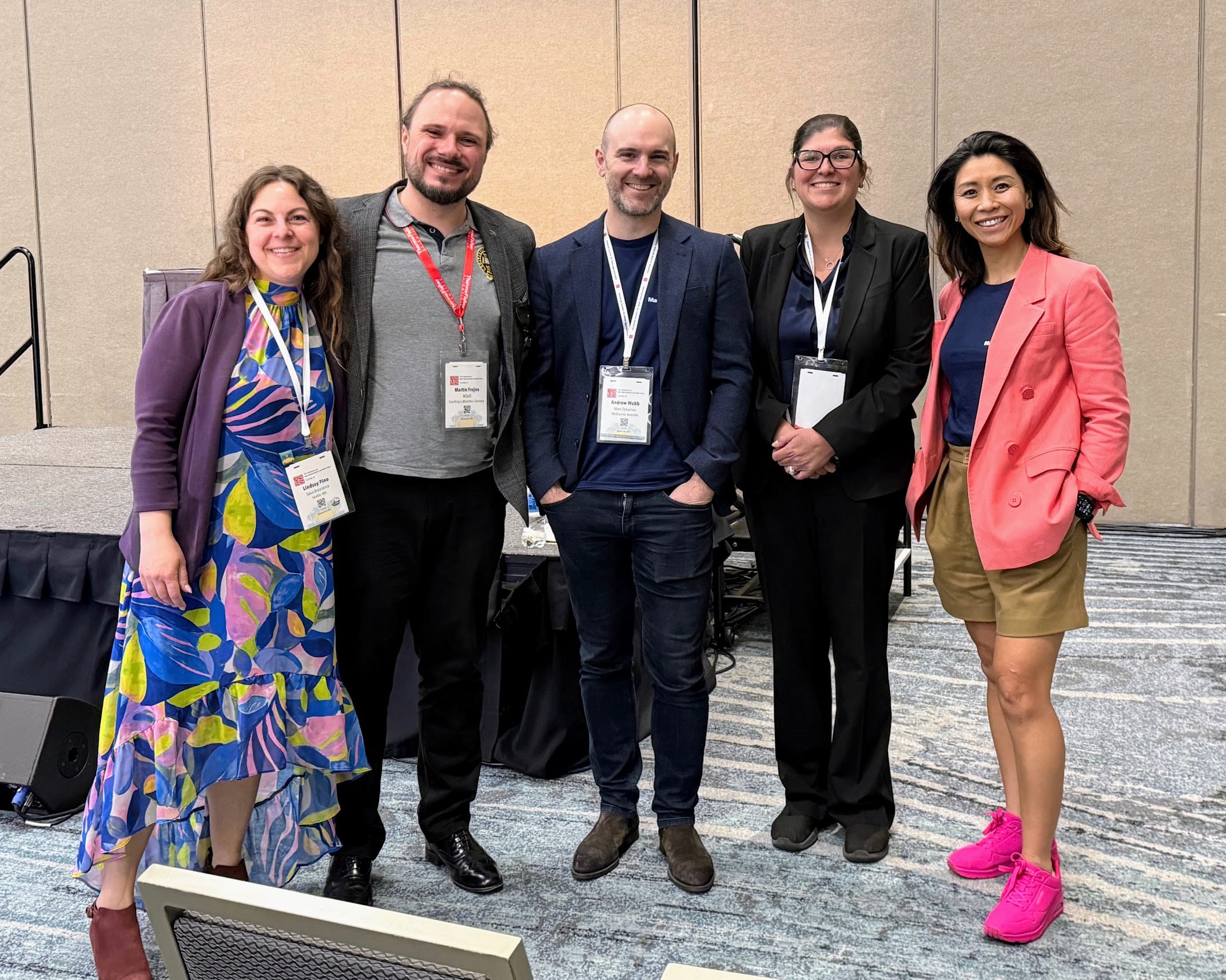
Who was in the room
- Martin Frejno, CEO and Co-Founder of MSAID
- Stephanie Correia, Associate Director of Corporate Development at Scripps Research
- Andrew Webb, Chief Scientist and Co-Founder of Mass Dynamics, and Co-Founder of IonOpticks
- Facilitated by Lindsay Pino, CTO and Co-Founder of Talus Bioscience, and me, Paula Burton, Co-Founder and CEO of Mass Dynamics
.png)
Three very different paths. A software company that ended up inside Thermo Fisher Scientific, a hardware company built on near zero funding, and a tech transfer office that sees hundreds of ideas a year and knows exactly where they get stuck.
Knowing when you actually have something
Everyone expects the moment. The flash when the idea turns into something that is real. What struck me is that almost nobody described it that way.
Martin's team built their first prototype in a dark, not very tidy lab on two laptops. His words for the early version were "terrible, really really terrible", right up until it wasn't. There was no single moment. It was a feeling that built over time until the founding team looked at each other and realised they had something the community could actually use.
"It wasn't a point in time where you say 'now we can go'. It was a feeling that developed over time." - Martin
Andrew's version was more concrete, because hardware tends to be. With IonOpticks they'd started manufacturing their own columns, and the data coming off them was good enough that someone senior phoned to ask how they were getting results his own factory couldn't. Andrew hand carried a literal handful of columns to a customer, and a week later that customer wanted to buy. They knew they had a product when they had an order in hand.
And from where Stephanie sits, the signal comes from the bench. Her team listens to the scientists closest to the problem first, then takes it out to customers, pharma, and venture groups to pressure test whether it's a real unmet need or just a cool result. The idea isn't enough on its own. You have to go and check it against the people who'd pay for it.
The money question every room asks
Then we got to the part nobody can avoid. How do you fund any of this when the equipment alone can cost millions.
Stephanie laid out the menu from the US institutional side: friends and family, angels, institutional VC, pharma venture arms and pharma companies themselves, and biotech companies investing in early stage research inside the lab before spinning it out. With 135 independent investigators at Scripps, there's no single playbook, it depends entirely on the technology.
Andrew and Martin had both lived the bootstrapping route, and they were honest that bootstrapping is only an option once you already have something to sell. Getting to that first product still costs you something, and in their case the currency was time. Late nights and weekends, at the expense of family life, deliberately traded now for something built for later.
"You can only bootstrap if you have a product, and arriving at that product takes investment. In our case that was time." - Martin
Martin's funding story is worth paying attention to, because it's a good antidote to the tidy version of these stories. MSAID went door to door, flew to England and elsewhere to present data, and got rejected more than once. They wrote a major EIC Accelerator grant, were invited to Brussels to pitch, and ultimately received a Seal of Excellence after the proposal was positively evaluated but not selected for funding. Months of work, then turned away. Shortly afterwards, MSAID entered into a partnership with Thermo Fisher Scientific, which eventually led to the acquisition.
A few practical things this room landed on:
Angel investing is a sensible place to start, and California is about the best place in the world to do it. But Andrew's point was that tapping those networks isn't just about turning up to events, it's about whether you can communicate the idea well enough that an investor can repeat it to their peers. For scientists, communication is often the bottleneck, not the science.
Grants exist much earlier than people think, and they don't cost you equity. Martin pointed out that the EIC Accelerator wants a technology readiness level of at least six, meaning a prototype already in hand, but other instruments, including some German government grants, go all the way down to the idea stage. Stephanie's point was that these non-dilutive sources sit alongside the equity routes, not instead of them. In the US that means SBIR and STTR grants, and traditional NIH mechanisms, all strong sources of early money. As Martin put it, don't underestimate an idea. You can get funded on one and keep building while you're still at the university.
Choosing who you take the money from
This was the conversation that drew the most energy in the room, and the panel didn't soften it.
The through line was to take capital with a little paranoia. When you take money you're trading funds or value for equity, and the people on your cap table are with you for a long time.
"Having an investor is probably more tightly coupled than being married."
- me, only half joking
An angel taking a leap of faith with their own money is one thing. VC is institutional capital, with the added pressure of creating wealth for their limited partners. So the panel's advice was to ask the questions early, and to run your own diligence in return. They will absolutely run diligence on you, so run it on them, going through the back channels and talking to founders in their existing portfolio, including the ones where it didn't go well.
They pushed just as hard on what an investor brings beyond the cheque. A board you can lean on when you need it most is easy to underrate, and it's the reason the reverse work matters. The wonderful investors we've been lucky to have at Mass Dynamics came from doing exactly that homework first.
Stephanie reinforced it from the other side, and this was one of the lines that landed hardest in the room.
"It's a two way street. You're interviewing them as much as they're interviewing you." - Stephanie
Some VCs genuinely want that kind of relationship, she said, bringing their network and expertise rather than just writing a cheque and disappearing until the next round. Others don't, and working out which intentions you're dealing with is exactly the sort of thing a founder's diligence is for. Her advice also extended past investors to the lawyers and advisors you bring in early, because in a space where you're forming complex new agreements, those relationships matter as much as the funding ones.
The hardest question of the night
Near the end, an audience member made a statement that they felt the whole room would resonate with. They put it bluntly. They brought up the scenario: once you get traction as a founder, how do you deal with the pressure of giving up equity, control, creativity. They went on to share stories about people getting 'screwed over' and good ventures 'getting ruined'. So how do you raise funds without losing the creativity, especially before you have any leverage to negotiate with.
It was a fair and slightly pointed question, and I loved that it got asked out loud.
The panel's answer came back to selection.
"If you're taking money from a shark, you're not doing your due diligence and you're not being selective enough. You don't get to choose your family, but you get to choose your friends." - Andrew
On creativity, Andrew's take was that it depends on the maturity of the company. Early on you have to be creative because you have nothing else. Later, with real revenue to protect, the creativity moves into different domains. He felt it never destroyed the creativity for him, if anything it gave him more, because he'd chosen co-founders he still wants to show up for nearly every day.
And Martin added the structural answer for founders with no leverage yet: in Europe especially, the early stage funding instruments exist precisely so you can keep ownership while you build, rather than handing over equity before you have anything to bargain with.
Building the team you can debate with
Everyone agreed the first hires matter more than almost anything. What I didn't expect was how strongly the panel argued for friction.
"You need naysayers. You need to create that internal tension and debate. These are people you can have arguments with and still show up at work the next day." - Andrew
The point was that the truth usually sits in the middle of a real debate, not in any one person's head. The skill is hiring people who'll disagree with you well.
Martin's framing also carried a dose of humility about who you hire. MSAID's founding team was unusually large at six members, many of whom came from the same bioinformatics group, and they recruited from their closest circle: master's students, former PhD students, even people who'd left for big pharma and were looking for alternatives. The challenge was convincing people to leave job security for an idea, because at that point the idea is mostly what you have.
"Surround yourself with people that are smarter than you, because eventually they'll know the product better than you do." - Martin
For Andrew, knowing himself was the unlock. Not just understanding what he's good at, but being honest about what he isn't, and deliberately finding people who complement the gaps.
Protecting what you build
The IP conversation is never glamorous, and it's always the one that can cost you the most.
Andrew told the story of IonOpticks drafting a patent, getting it ready to file, and then deciding to withhold it and keep the method as proprietary information, because filing would have handed competitors the recipe. In hindsight he's sure that was the right call. For physical products with a real recipe, sometimes the protection is not telling anyone.
Software is different, and Martin and Stephanie drew out the tension nicely. Martin's team did file several patents, and writing the first one to be understandable by a knowledgeable non specialist was, in his words, a monumental undertaking. But he was candid that for proteomics software a patent has limits, because it describes in detail what you're doing and why, and academic groups can build on that and release alternatives for free. Often, the moat for software, he argued, ends up being momentum, know-how, and brand, the two or three years of head start that are hard to catch.
Stephanie added the constraint academics live with: trade secrets work beautifully for a company, but they're not an option when your faculty have to publish. So academic protection leans on copyright and carefully chosen patents instead. Her standing advice, and Andrew's, was the same. If you're anywhere near spinning something out, talk to your tech transfer office now, and get the support of people who do this for a living.
When you have no leverage yet
One audience member asked the question a lot of people in mass spec are quietly sitting on. If I want to start a service company and I've calculated I need millions, do I really need all of that before I begin, and how do I compete against established labs with far more capacity.
The panel reframed it rather than pretending the number away.
Andrew's challenge: don't accept the full cost. Negotiate access to instruments for close to nothing and find the highest margin you can on each transaction. He'd done exactly this at IonOpticks, working out in a spreadsheet what incubating the company inside an institute would have cost, then pitching the director to provide that incubation in exchange for a small slice of equity. Two years, no salary, almost no costs, all the revenue reinvested.
Andrew and the panel came back to the niche. Someone bigger can always do the standard thing faster and cheaper, so don't compete there.
"Focus on what differentiates you. Why is what you're doing better?" - Andrew
Find the thing only you can do, a clever experiment, a sample type, a way of looking at the data nobody else offers, and let that be why people come to you. Stephanie made the same point from the investor's chair, that differentiation is what attracts the funding to get you across the line.
And on the perennial question of whether to wait until later in your career, the panel leaned toward acting sooner.
"If you have an idea that's new now, act on it rather than parking it for ten years. With this many people on the planet, you're probably not the only one thinking about it." - Martin
Andrew's nuance was that timing is often opportunistic. The window matters as much as the product, and being early enough at the right moment is frequently what makes a company. The best product in the world won't sell if nobody's ready to buy on the other end.
Thinking about the end before you're near it
We talked about exits, and the most useful thing was how differently the panel held them.
Some businesses, especially in therapeutics, have to be built with the exit in view, because investors want to know how they get their money back. MSAID, by contrast, never really thought about an exit, they thought about continuation, about staying together as a team and supporting what they'd built for the long game. Their acquisition grew naturally out of that.
Andrew's closing thought is the one that resonated.
"You think about the exit and you work hard every day, but the exit might not happen. We might work ten years and not make any money. So it has to be about the journey, and who you go on it with." - Andrew
What I took away
The same thing that struck me in Toronto struck me again here. A room full of scientists arrived thinking entrepreneurship was a different species of person, and left realizing the gap between where they are and where they'd need to be is smaller than they thought. Communicating a problem clearly, being honest about what you don't know, choosing the right people and being rigorous about who you let in: that's not some separate entrepreneurial gene. It's a lot of what good science already asks of you.
What was specific to this room was the honesty about money in a capital intensive field, and the reminder that the most important diligence you'll ever do is into the people who might fund you, not the other way around.
To the panelists, thank you. Stephanie travelled in from La Jolla and wasn't even at the conference for her own work, Martin and Andrew brought stories from Europe and Australia, and the whole thing only works because they were willing to be real.
If you were in the room, I hope this captures some of it. If you weren't, come find Lindsay and I at the next one.
--
This post was produced by Paula Burton from notes and the session recording, with assistance from Anthropic's Claude.
It is shared from the panel's experience, not as financial, legal or investment advice. Every company, cap table and jurisdiction is different, so take it as a starting point for your own thinking and get advice from people who do this professionally before you act.
Each speaker reviewed their own section. No speaker reviewed the full piece end to end, and all synthesis and takeaways are my own. Any errors or omissions are unintentional. The views expressed belong to the author and not necessarily to the author's or panelists' employer or any other organization.